With the continuous rise of power grid voltage levels and the large-scale application of GIS equipment in substations, on-site AC withstand voltage testing has become a key link in inspecting the installation quality and insulation performance of GIS. The capacitance of GIS is relatively small, with a single interval usually ranging from a few hundred picofarads to several thousand picofarads. However, the test voltage increases sharply with the voltage level, which puts special requirements on the test equipment for "high voltage, low current, and pure waveform". Faced with a wide variety of testing devices in the market, how to systematically select from technical parameters, configuration forms to on-site working conditions has become a practical issue for power testing units.
Variable frequency series resonance: the mainstream technical route for GIS testing
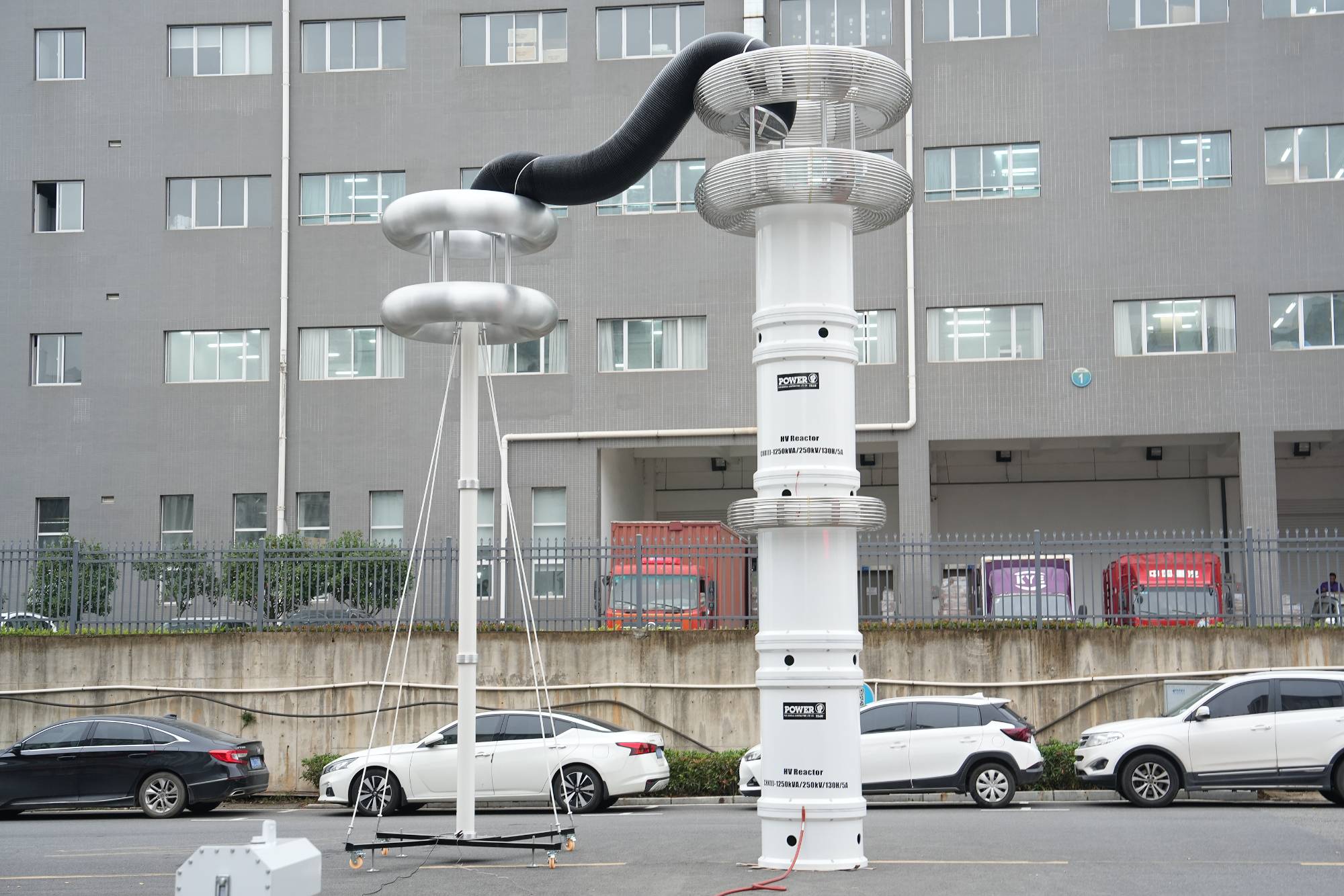
The frequency conversion series resonance test device has been recognized by the industry as the preferred solution for on-site communication voltage withstand testing in GIS. The principle is to adjust the output frequency of the variable frequency power supply, so that the inductance of the reactor in the circuit and the capacitance of the test sample reach a resonant state at a specific frequency. At this time, the circuit exhibits pure resistance characteristics, and only a very small excitation power is needed to generate a high test voltage far exceeding the input at both ends of the test sample. Compared to traditional power frequency test transformers, the series resonant device requires significantly reduced power supply, and the entire equipment is lightweight and compact, making it more suitable for mobile operations in substations.
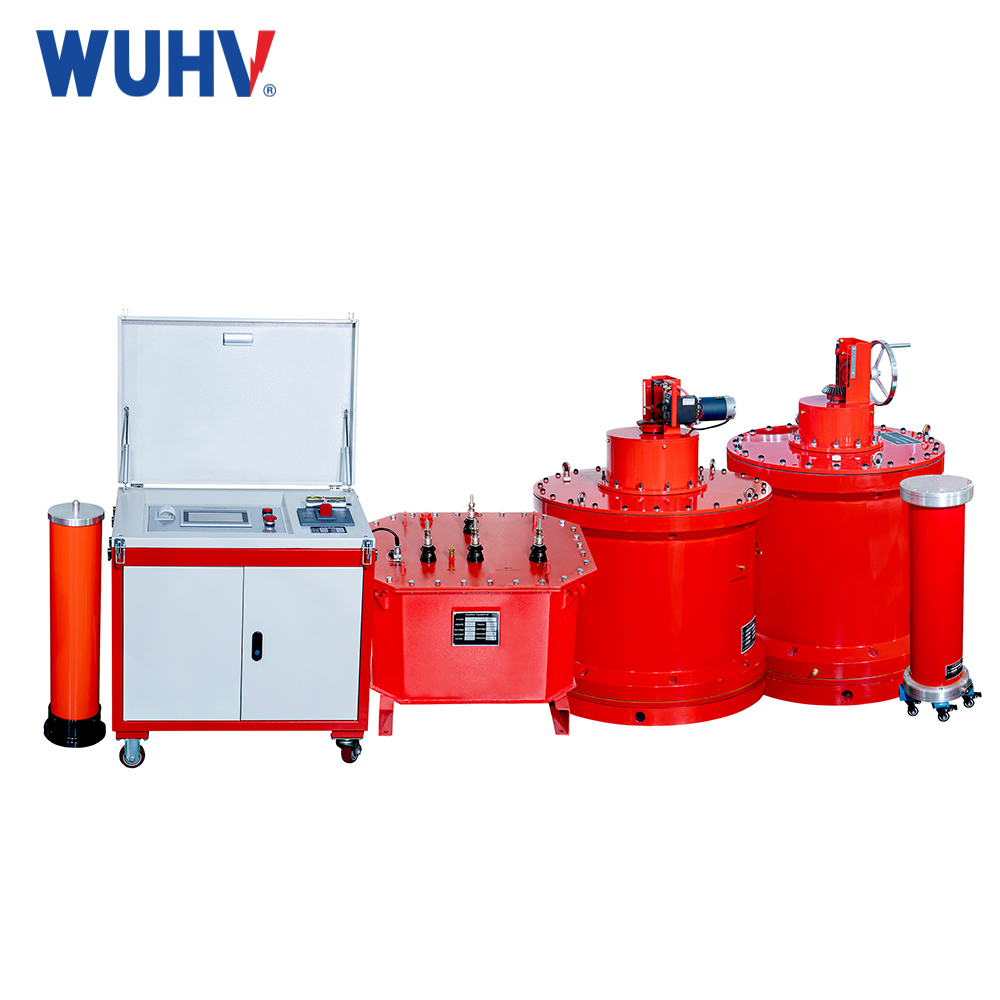
Wuhan UHV Power Technology Co., Ltd. has a relatively complete product layout in this field. Taking its UHV-810kVA/270kV variable frequency series resonant withstand voltage test device as an example, the device explicitly lists the AC withstand voltage test of 110kV switches and GIS as one of the design goals, with a test frequency covering 30 to 300Hz, a test voltage not exceeding 265kV, and a test time of 1 minute. It is worth noting that the device adopts a modular configuration of 10 UHV-81kVA/27kV high-voltage reactors, which can cover various sample requirements from 110kV GIS to 220kV main transformer neutral point through series combination, reflecting the selection concept of "one machine with multiple functions".
Voltage level and capacity: hard constraints for selection
The primary criterion for equipment selection is the voltage level and test voltage requirements of the tested GIS. According to DL/T 555 and other regulations, the on-site handover test voltage for GIS equipment with insulation level of 550kV is 0.8 times the factory test value, corresponding to an applied voltage of approximately 592kV. This means that the rated output voltage of the testing equipment must have a margin to cover this value. For 110kV GIS, the test voltage usually does not exceed 265kV; for 220kV GIS, the equipment needs to have an output capacity of over 300kV; GIS with a voltage level of 500kV and above requires the test system to achieve a voltage output of 600kV or even higher.
Capacity selection cannot be ignored either. Although GIS has a small capacitance, the quality factor Q value of the test circuit, the current carrying capacity of the reactor, and the power matching of the variable frequency power supply jointly determine whether the system can stably rise to the target voltage. When selecting, the resonant frequency and required reactive power should be calculated based on the actual capacitance of the tested GIS (typical values for individual intervals between 300pF and 1000pF), ensuring that the equivalent inductance of the reactor combination and the capacitance of the test sample can find a stable resonant point within the range of 20 to 300Hz.
Partial discharge level: an uncompromising performance baseline
For GIS equipment, one of the core purposes of AC withstand voltage testing is to synchronously monitor the level of partial discharge during the boosting process. Minor defects in pot insulators, isolating switches, and other parts are often only exposed in the form of partial discharge signals when the voltage rises to near the rated value. Therefore, the background partial discharge level of the experimental equipment itself directly determines the sensitivity and reliability of the detection.
The UHVCW vehicle mounted high-pressure inflatable no partial discharge combination experimental device of Wuhan UHV provides clear performance indicators in this dimension. The device adopts SF ₆ gas insulation and fully sealed metal shell structure, and the overall partial discharge can be controlled within the range of 1 to 3pc. It is suitable for insulation withstand voltage test and partial discharge test of high voltage, large capacity GIS and GIL equipment. Its voltage level covers 100kV to 1000kV, with a capacity range of 50 to 2000kVA. It adopts a single-stage boosting method without the need for cascade boosting, reducing the partial discharge interference introduced by the boosting process from the source. For situations where GIS requires joint testing of "withstand voltage+partial discharge", the background noise level provided by such non partial discharge devices is an important benchmark for determining whether the test sample is qualified.
Configuration form: Choice between laboratory fixed and on-site vehicle mounted
Another key dimension of selection is the deployment form of the equipment. Laboratories or factory testing centers usually choose fixed oil immersed or inflatable non partial discharge testing systems, pursuing long-term stability and heat dissipation capabilities. The handover test and preventive test at the substation site place more emphasis on the mobility and rapid deployment capability of the equipment.
The on-board integrated solution integrates core components such as no partial discharge test transformers, coupling capacitors, and partial discharge detectors into the chassis of special vehicles. After arriving at the site, the leads can be unfolded to carry out the test, and the preparation work can be greatly compressed by the traditional split solution. The UHVCW device of Wuhan UHV adopts a vehicle mounted hydraulic lifting design, with the high-voltage part fully sealed in a shielded space and a built-in high-voltage isolation switch to achieve multi-purpose use, which can be directly connected to the test sample. For remote substations, wind farm booster stations and other test scenarios with inconvenient transportation, the advantages of vehicle mounted solutions in terms of efficiency and safety are particularly prominent.
From selection to use: engineering judgment beyond parameters
The indicators on the equipment parameter table are the basis for selection, but the final decision on whether the experiment can be successfully completed is often the accurate prediction of the on-site working conditions. Whether the SF ₆ gas pressure of each GIS chamber is normal, whether the pressure equalization cover and shielding wire of the high-voltage lead are installed in place, and whether the grounding system is reliable, these seemingly peripheral factors directly affect the establishment of resonance and the credibility of partial discharge data in practical operation. The completeness of equipment protection functions - overvoltage, overcurrent, zero start, flashover protection, and voltage value recording capability - also needs to be evaluated when selecting.
There is no "universal optimal solution" in the selection of GIS communication withstand voltage testing equipment that is detached from specific test samples and test scenarios. From the test voltage level, sample capacitance, partial discharge detection requirements to deployment form and on-site conditions, each layer of judgment is narrowing down the selection range. Wuhan UHV's product line, centered around variable frequency series resonant devices and non partial discharge inflatable testing systems, provides multiple selection paths from modular reactor combinations to vehicle integrated solutions for different voltage levels and testing scenarios. Its technical parameters and configuration logic can serve as a reference benchmark for power testing unit selection decisions.